
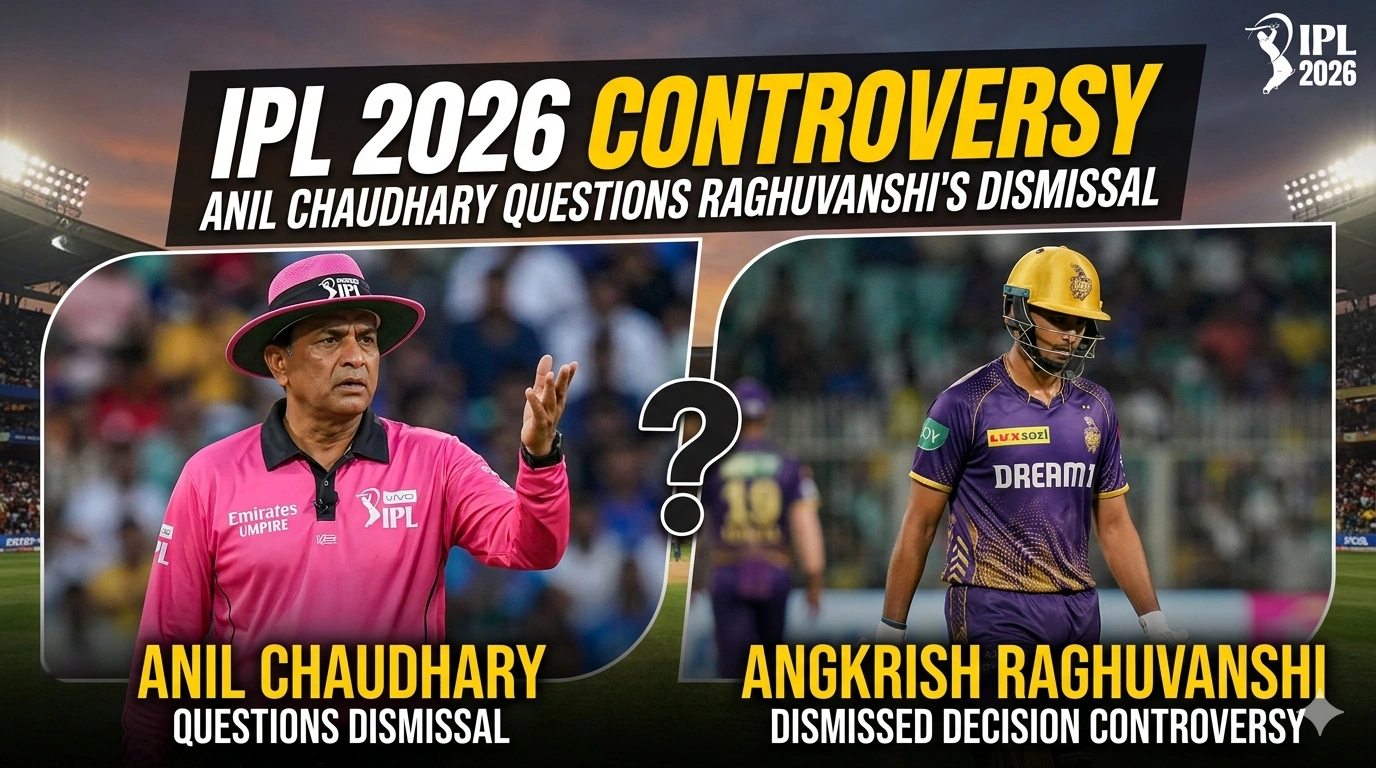
The IPL 2026 season has once again sparked debate over umpiring decisions, with former international umpire Anil Chaudhary raising concerns about a controversial dismissal involving young batter Angkrish Raghuvanshi.
The incident has triggered discussions among fans and experts about how the “obstructing the field” rule is being interpreted in modern cricket.
What Happened During the Match?
The controversy unfolded during a high-pressure IPL 2026 match when Raghuvanshi was adjudged out for obstructing the field.
The decision came after he appeared to change direction while running between the wickets, which the fielding side appealed against.
According to the on-field officials, the batter’s movement interfered with the fielder’s attempt to collect and throw the ball.
The appeal was upheld, and Raghuvanshi had to walk back, leaving both players and viewers divided over whether the decision was justified.
Anil Chaudhary Shares His Perspective
Veteran umpire Anil Chaudhary did not fully agree with the decision. Speaking about the incident, he explained that a simple change of direction should not automatically result in a dismissal under the obstructing the field rule.
Chaudhary emphasized that intent plays a crucial role in such cases. In his view, unless a batter deliberately tries to block or distract the fielder, the benefit of doubt should go to the player.
He pointed out that running adjustments are often instinctive and part of normal gameplay, especially when players are trying to avoid a direct hit or collision.
His comments have added weight to the argument that the decision may have been too harsh.
Understanding the “Obstructing the Field” Rule
The “obstructing the field” rule in cricket is designed to prevent batters from unfairly interfering with fielders. However, it is one of the most debated laws because it involves subjective judgment.
For a batter to be given out under this rule:
- There must be clear obstruction
- The action should appear intentional
- It must affect the fielding side’s ability to complete a play
In Raghuvanshi’s case, the key question remains: was his change in direction deliberate or simply a natural reaction during a run?
Why This Decision Has Sparked Debate
This incident has become a talking point because it sits in a grey area of the law. Many experts believe that:
- Running between wickets often involves sudden movement changes
- Players instinctively avoid getting hit by the ball
- Not every deviation should be treated as obstruction
Chaudhary’s remarks reflect a broader concern among former officials that strict interpretations without considering intent could lead to unfair dismissals.
Impact on Players and Matches
Decisions like these can have a significant impact on the outcome of matches, especially in a tournament as competitive as the IPL. Losing a key batter at a crucial moment due to a controversial call can shift momentum instantly.
For young players like Raghuvanshi, such incidents can also be learning experiences. However, they highlight the need for clarity in rules so that players know exactly what is acceptable during gameplay.
Fans React to the Controversy
Social media platforms were quick to react after the dismissal. Many fans questioned the decision, arguing that:
- The batter did not intentionally block the fielder
- The movement looked like a natural attempt to complete the run
- The rule was applied too strictly
Others supported the umpire’s call, stating that players must be careful about their movements when the ball is in play.
This divide in opinion shows just how complex such decisions can be.
The Need for Clearer Guidelines
One of the biggest takeaways from this incident is the need for clearer guidelines around the obstructing the field rule.
While laws exist, their interpretation can vary depending on the situation and the umpire’s judgment.
Experts like Anil Chaudhary believe that:
- Intent should remain the primary factor
- Marginal or unintentional movements should not result in dismissal
- Consistency in decision-making is essential for fairness
With technology playing a bigger role in modern cricket, there is also a growing expectation that such decisions should be reviewed more thoroughly.
Conclusion
The dismissal of Angkrish Raghuvanshi in IPL 2026 has once again highlighted the challenges of interpreting complex cricket laws.
While the umpires followed the rulebook, the debate raised by Anil Chaudhary suggests that there is still room for improvement in how these situations are judged.
As the tournament progresses, this incident will likely remain a reference point in discussions about fairness, intent, and consistency in cricket umpiring.
For now, it serves as a reminder that even in a highly professional league, certain decisions can still divide opinions across the cricketing world.