
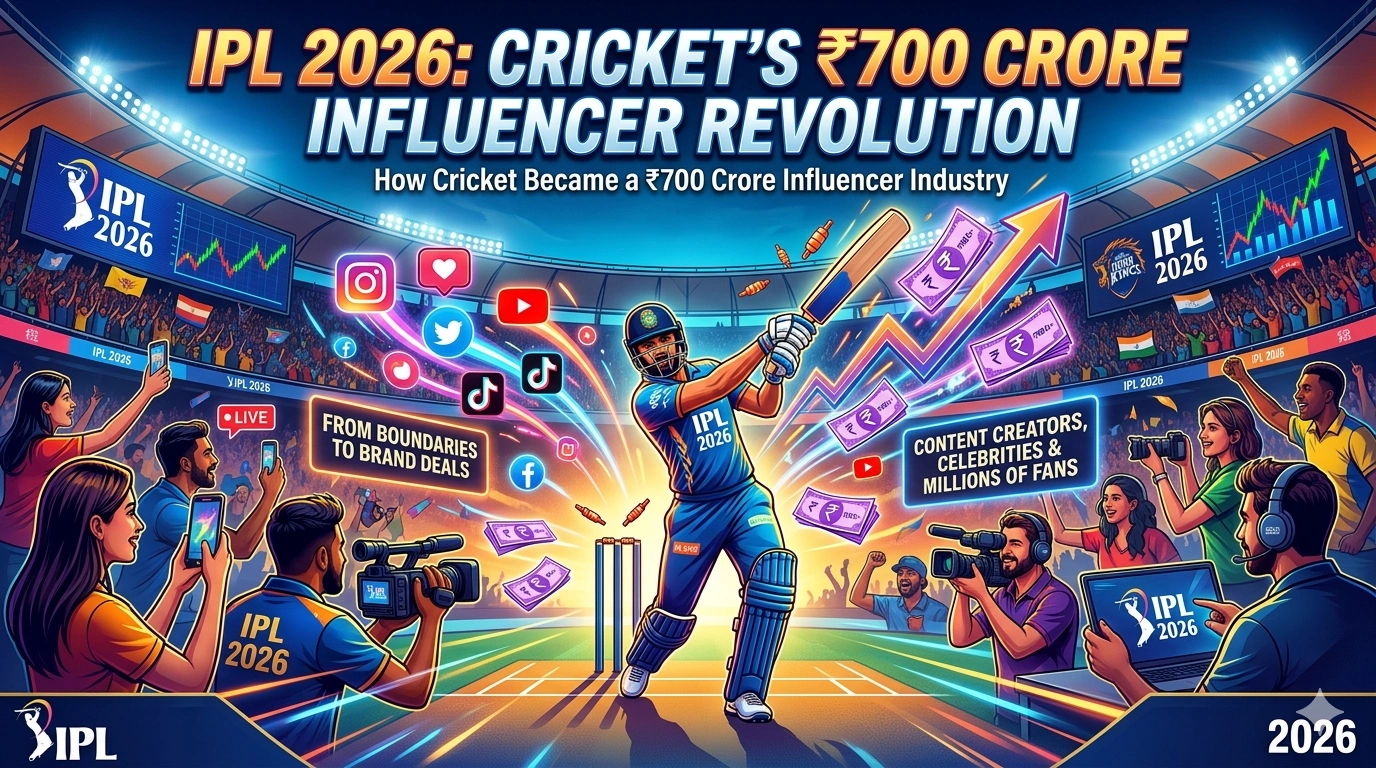
The Indian Premier League has grown far beyond a cricket tournament. In 2026, it is not just about runs, wickets, and trophies—it has become a powerful marketing engine where players double up as influencers, driving a booming ₹700 crore digital economy.
With brands shifting focus toward digital audiences, IPL cricketers are now among the most sought-after faces for online campaigns.
From Instagram reels to brand collaborations, the league has reshaped how athletes earn and how companies connect with fans.
Rise of the IPL Influencer Economy
Over the years, IPL players have built massive followings on social media. Stars like Virat Kohli, MS Dhoni, and Rohit Sharma command millions of followers, making them highly valuable to brands.
This popularity has given rise to a new trend—cricketers acting as influencers. During IPL 2026, brands are investing heavily in player-led promotions, often timing campaigns to coincide with matches for maximum visibility.
Unlike traditional advertising, these collaborations feel more personal. A player sharing a product on social media often creates stronger engagement than a standard TV commercial.
Why Brands Are Betting Big on IPL Players
Brands are increasingly shifting budgets from television to digital platforms. IPL players offer something unique—instant reach combined with credibility.
When a cricketer endorses a product, it reaches fans who already trust and admire them. This leads to better engagement, higher recall, and stronger conversion rates.
Another key factor is timing. During the IPL season, players remain in constant public view. Their performances on the field directly influence their online popularity, making campaigns more impactful.
For example, a match-winning performance can significantly boost a player’s engagement rates within hours, giving brands immediate exposure.
Social Media Platforms Driving Growth
Platforms like Instagram and YouTube have become central to this influencer boom. Short videos, behind-the-scenes clips, and match-day content help players stay connected with fans.
Cricketers are no longer limited to match highlights. They share fitness routines, travel moments, and personal insights, creating a more relatable image.
This constant interaction keeps audiences engaged throughout the season and even beyond it, making players long-term marketing assets rather than seasonal endorsers.
Earnings Beyond Match Fees
Traditionally, IPL earnings came from contracts and match fees. However, influencer marketing has added a new revenue stream.
Top players now earn significant amounts from brand deals, often surpassing their match earnings during the season. Even emerging players are benefiting, as brands look for fresh faces with growing fan bases.
This shift has created a more balanced earning ecosystem, where performance on the field and popularity online both contribute to a player’s income.
Emerging Players Also Cashing In
The influencer wave is not limited to big names. Young talents and uncapped players are also gaining attention from brands.
With fans constantly searching for new heroes, breakout performances quickly translate into social media growth.
Brands are keen to tap into this early momentum, often signing players before they become mainstream stars.
This trend has opened doors for many cricketers, allowing them to build their personal brand early in their careers.
Impact on the Advertising Industry
The IPL influencer economy is changing how advertising works in India. Instead of relying solely on big-budget TV campaigns, brands are now focusing on targeted digital promotions.
This shift allows companies to reach specific audiences more effectively. For instance, a player popular among younger fans can help brands connect directly with Gen Z viewers.
As a result, marketing strategies are becoming more data-driven, with brands closely tracking engagement, reach, and audience behavior.
Challenges in the Influencer Space
While the growth is impressive, it also comes with challenges. Oversaturation is one concern, as too many promotions can reduce authenticity.
Fans can quickly lose interest if content feels overly commercial. Therefore, players and brands need to strike the right balance between promotion and genuine engagement.
Another challenge is performance dependency. A player’s popularity can fluctuate based on form, making influencer value somewhat unpredictable.
Future of IPL’s Digital Economy
The ₹700 crore influencer market around IPL is expected to grow further in the coming years. With increasing internet penetration and rising social media usage in India, digital campaigns will continue to expand.
New technologies like AI-driven analytics and personalized marketing will likely make campaigns even more effective. However, the core factor will remain the same—fan connection.
Players who can maintain a strong bond with their audience will continue to dominate both on and off the field.
Conclusion
IPL 2026 highlights how cricket has evolved into a full-fledged digital business ecosystem. The league is no longer just about sports—it is a platform where entertainment, marketing, and social media come together.
As players turn into influencers and brands embrace digital strategies, the IPL continues to set new benchmarks.
The ₹700 crore influencer economy is just the beginning, and its impact on sports marketing is only set to grow stronger in the years ahead.