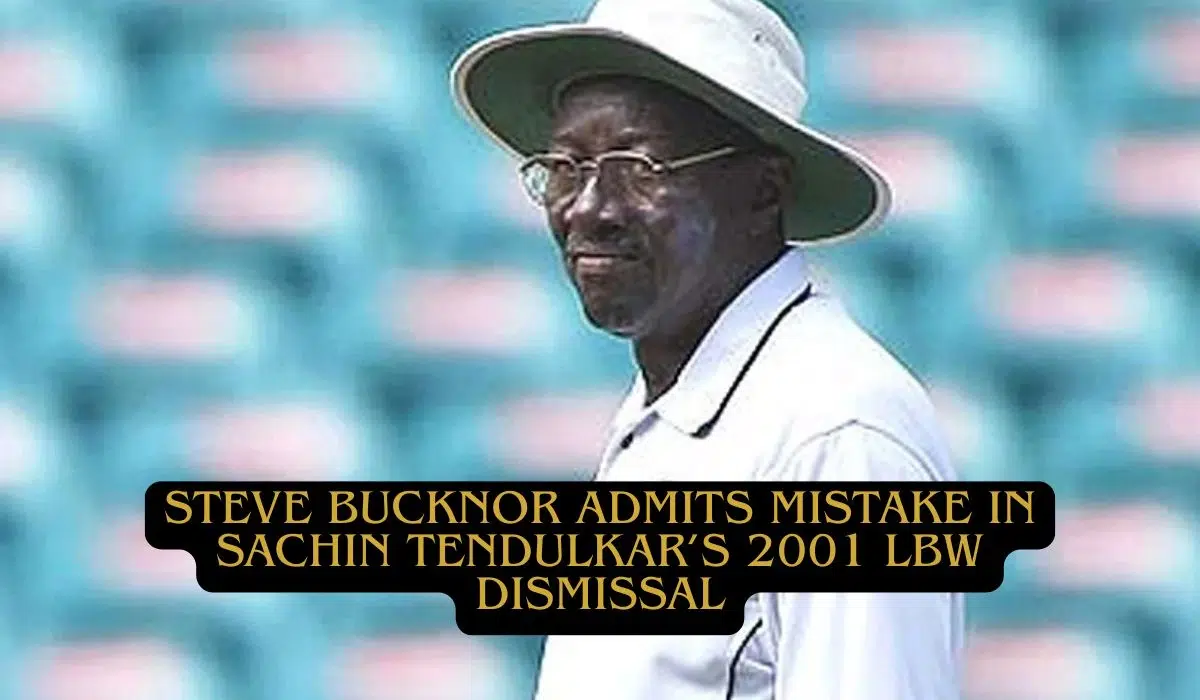
More than two decades after one of the most debated umpiring calls in cricket history, former ICC elite umpire Steve Bucknor has finally acknowledged that the lbw decision against Indian legend Sachin Tendulkar during the 2001 Kolkata Test was indeed an error.
The admission has reignited discussions about that unforgettable Test match between India national cricket team and Australia national cricket team, which remains one of the most dramatic contests in the history of the sport.
A Decision That Sparked National Outrage
The incident occurred during the second Test of the 2001 Border-Gavaskar Trophy at Eden Gardens.
India was under immense pressure after following on, and Sachin Tendulkar walked in with the responsibility of steadying the innings.
However, he was given out lbw to Jason Gillespie in what many fans and experts described as a highly questionable call.
Replays at the time suggested the ball hit Sachin’s shoulder before reaching the bat or pads, but without DRS in place back then, the on-field decision stood.
The dismissal caused a wave of frustration among Indian fans and added fuel to the long-running debate about the lack of technological support for umpires during that era.
Bucknor Breaks His Silence After 22 Years
After remaining relatively quiet about the incident for years, Steve Bucknor finally admitted the mistake in a recent interview. He said:
“Of course, I made errors. And that Tendulkar decision in Kolkata was one of them.”
His confession has brought closure for many fans who still remember the moment as a turning point in the match.
Bucknor, widely respected for his long umpiring career, acknowledged that even experienced officials are not immune to mistakes, especially in days when no advanced technology was available to re-evaluate decisions.
The Importance of That Dismissal in the Match Context
While the LBW decision was controversial, the Kolkata Test turned into one of India’s greatest comebacks.
The partnership between VVS Laxman and Rahul Dravid, along with Harbhajan Singh‘s match-winning bowling performance, helped India script a famous victory.
However, many believe that Sachin’s presence could have strengthened India’s position even further.
His early dismissal, especially from a wrong decision, made fans wonder how differently the innings might have unfolded.
Umpiring Pressure and Lack of Technology in 2001
At a time when modern tools like DRS, ball-tracking, and ultra-edge were absent, umpires had to rely entirely on their instincts and positioning.
Bucknor mentioned how challenging those conditions were, especially during high-pressure matches involving top teams.
His acknowledgment also highlights how far the sport has progressed. Today, technology minimizes such errors and ensures greater fairness for players.
While debates continue around DRS rules, it’s undeniable that cricket is much more balanced than it was in the early 2000s.
Fans React to the Long-Awaited Admission
Cricket fans across India and around the world shared mixed reactions:
- Some appreciated Bucknor’s honesty, saying it takes courage to admit such a mistake after so many years.
- Others believe the confession doesn’t change the frustration they felt back in 2001.
- Many highlighted how such decisions shaped the demand for technological reforms in cricket.
On social media, Sachin’s supporters expressed gratitude for the acknowledgment, even though it came more than two decades later.
Bucknor’s Legacy Despite the Controversy
Despite the Kolkata incident, Steve Bucknor’s reputation as one of the game’s most experienced umpires remains intact. He officiated in:
- 128 Test matches
- 181 ODIs
- Five consecutive Cricket World Cup finals
Few umpires in cricket history have matched such experience. His mistake in Tendulkar’s dismissal was one among many human errors that happened before technology became a central part of decision-making.
Sachin Tendulkar’s Graceful Response Over the Years
Interestingly, Sachin has rarely shown any bitterness regarding the call. Throughout his career, he maintained composure and accepted such decisions as part of the game.
His focus remained on contributing to the team, regardless of setbacks.
This professionalism is one reason why he is still respected worldwide, not only for his records but also for his conduct on and off the field.
How the Incident Shaped Modern Cricket
The uproar that followed the 2001 decision contributed to wider discussions within the cricket community about bringing fairness to officiating. It pushed the ICC to speed up technological integration into the sport.
Today, DRS has become a crucial element of cricket, reducing umpiring errors and giving players a fair chance to challenge decisions.
Conclusion
Steve Bucknor’s admission about the Sachin Tendulkar LBW error reopens one of cricket’s most talked-about moments.
While the decision cannot be reversed, the honesty brings a sense of closure for fans who have discussed this incident for years.
The 2001 Kolkata Test remains unforgettable, not just for the controversy, but for India’s remarkable comeback and the evolution it triggered in cricket’s officiating standards.
Bucknor’s reflection reminds fans that even legends of the game, whether players or umpires, are human after all.