
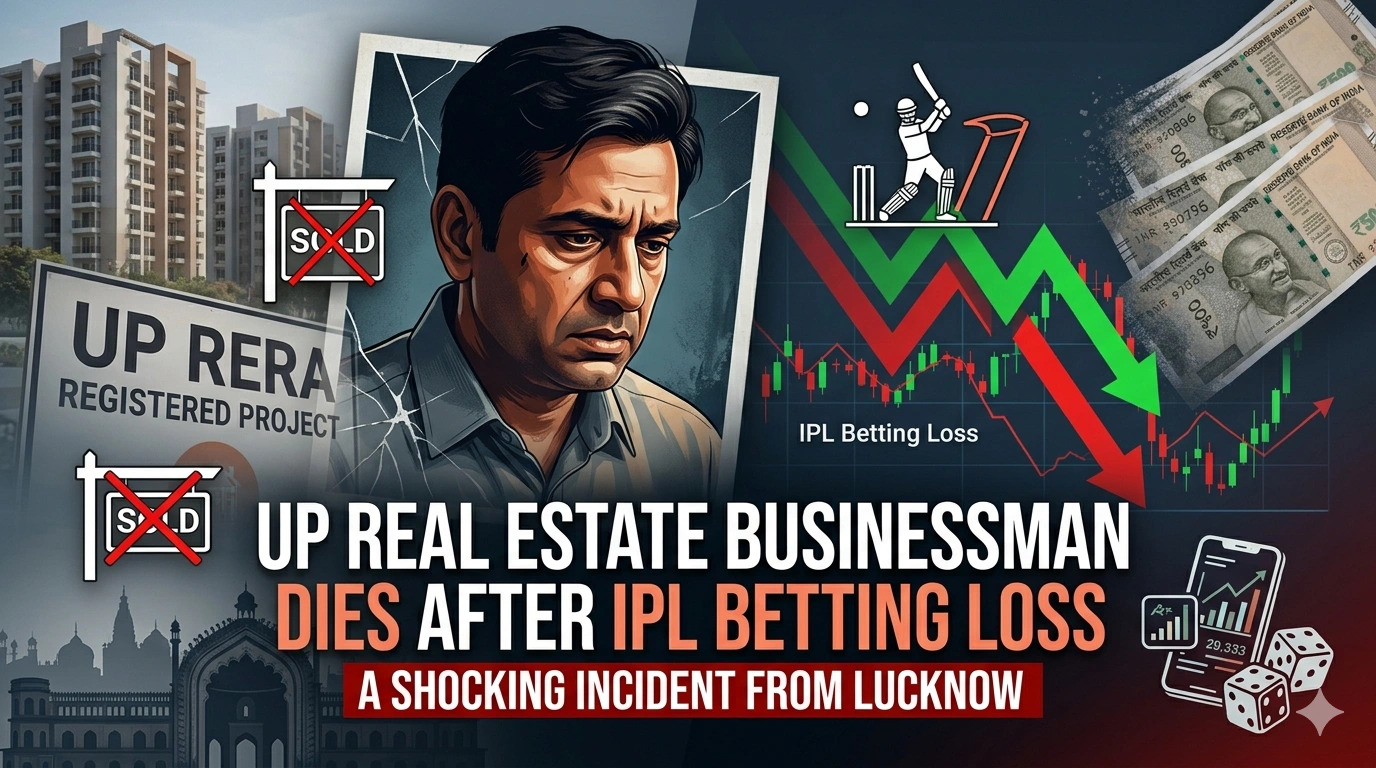
A heartbreaking incident from Lucknow has once again highlighted the dark side of betting during cricket tournaments. A real estate businessman reportedly died after jumping from the 11th floor of a residential building, following heavy financial losses in IPL betting.
According to reports, the man had lost a significant amount of money while placing bets during ongoing IPL matches. The mounting losses reportedly pushed him into severe emotional distress, ultimately leading to the tragic decision.
Emotional Last Call to Wife
Before taking the extreme step, the businessman made a phone call to his wife that has left many shaken. During the call, he was reportedly crying and expressing regret over the financial losses he had suffered.
Family sources revealed that he was deeply upset and overwhelmed by the situation. His final conversation reflected guilt and helplessness, as he struggled to cope with the consequences of his betting activities.
Shortly after the call, he jumped from the 11th floor of the building. Despite immediate efforts to rush him to a hospital, he could not be saved.
Financial Losses Linked to IPL Betting
Initial investigation suggests that the businessman had been actively involved in betting on IPL matches. Over time, his losses reportedly ran into lakhs of rupees, creating financial pressure.
Betting, especially during high-profile tournaments like the IPL, has seen a sharp rise in recent years. Many individuals are drawn by the promise of quick money, but the risks often outweigh the rewards.
Experts point out that such activities can quickly spiral out of control, especially when losses begin to accumulate. In many cases, individuals attempt to recover losses by placing more bets, leading to a dangerous cycle.
Police Investigation Underway
Local police have begun an investigation into the incident. Authorities are examining the financial transactions and phone records to understand the sequence of events.
Officials are also trying to determine whether the businessman was linked to any organized betting network. Cases involving illegal betting often involve digital transactions and online platforms, making them more complex to track.
So far, no foul play has been suspected, and the case is being treated as a suicide linked to financial stress.
Rising Concern Over Betting Addiction
This incident has once again raised serious concerns about the growing trend of betting addiction in India. With the popularity of cricket leagues like the IPL, betting activities—both legal and illegal—have increased significantly.
Experts warn that gambling addiction can have severe psychological and financial consequences. Many individuals fall into the trap thinking they can control their bets, but losses often lead to stress, anxiety, and depression.
Studies suggest that even experienced bettors struggle to make consistent profits, as outcomes are largely unpredictable.
Impact on Families
Beyond financial damage, such incidents leave families devastated. The emotional trauma faced by loved ones is often long-lasting.
In this case, the businessman’s wife and family members are reportedly in shock. The incident serves as a reminder that betting losses do not just affect individuals, but entire families.
A Warning Sign for Society
The Lucknow tragedy is not an isolated case. Similar incidents linked to financial stress and gambling have been reported across different parts of the country.
The easy availability of online betting platforms, combined with aggressive promotion during sports events, has made it easier for individuals to get involved.
There is an urgent need for awareness and stricter regulation to prevent such incidents. Financial literacy and mental health support can also play a crucial role in reducing such risks.
Conclusion
The death of a Lucknow businessman after IPL betting losses is a stark reminder of how dangerous gambling can become when it goes unchecked. What may begin as entertainment can quickly turn into a serious problem with devastating consequences.
This incident highlights the importance of responsible behavior, awareness, and timely support for those facing financial or emotional distress. Preventing such tragedies requires collective effort—from families, authorities, and society as a whole.